


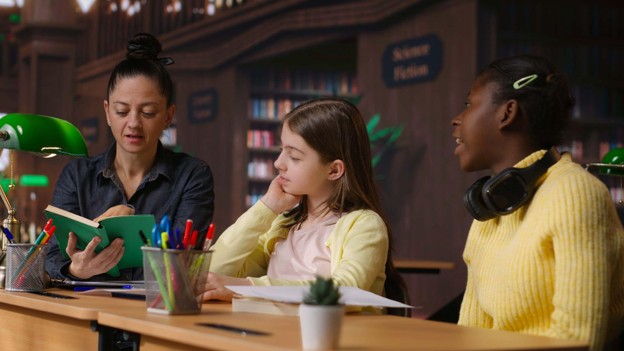
Few settings in education ask as much of students as the language immersion classroom, and Joshua Zatcoff, an Arizona educator who has taught in a French immersion program and speaks Italian, Spanish, and French, sees it as one of the most rewarding as well. Students there are not simply studying a language as a subject; they are learning history, writing, and problem-solving through that language every day, building language and content knowledge side by side.
Immersion changes how students learn, not only what they learn. When a second language becomes the medium of instruction, students are pushed to listen more carefully, reason more precisely, and connect ideas across two linguistic systems.
What Makes an Immersion Classroom Different
Traditional language classes treat a second language as the subject itself. Students study vocabulary, grammar, and conversation, often for a single class period each day.
Immersion programs work differently. Academic subjects are taught partly or fully in the target language, so a lesson about geography, science, or government becomes a language lesson at the same time. Students acquire vocabulary because they need it to understand the content in front of them.
This need-based learning, Joshua Zatcoff points out, gives language a purpose. Students remember words more readily when those words let them explain a historical event or follow a classroom discussion, rather than when they appear on a list to memorize.
Joshua Zatcoff on Why Context Strengthens Understanding
Learning content in a second language can seem harder at first, and in some ways it is. Students must work to decode meaning before they can analyze it.
That extra step, as Joshua Zatcoff explains to fellow educators, often leads to deeper understanding. Students cannot rely on skimming or familiar phrasing, so they slow down and focus on what a text or explanation truly means.
Several habits tend to develop in immersion students:
- Listening closely for meaning rather than individual words
- Using context clues to interpret unfamiliar terms
- Asking clarifying questions more often
- Restating ideas in their own words to confirm understanding
- Comparing how concepts are expressed in different languages
These habits carry over into every subject, including those taught in English.
Building Confidence Through Gradual Challenge
Immersion can be intimidating, especially for younger students or those joining a program later. A thoughtful teacher builds confidence by adjusting support as students grow.
In those early stages, Joshua Zatcoff emphasizes the value of visual aids, gestures, repeated routines, and clear models. As students become more comfortable, teachers can reduce that support and expect more independent expression.
The goal is steady progress rather than instant fluency. Students who feel safe making mistakes are more willing to speak, and speaking often is one of the fastest ways to improve.
The Role of Writing in a Second Language
Writing is often the most demanding skill in an immersion program. Students must organize ideas, choose precise vocabulary, and follow grammatical rules that may differ significantly from English.
From the perspective of Joshua Zatcoff, whose teaching background also includes AP English Language and Composition, writing in a second language can sharpen writing skills in general. Students learn to think about structure, clarity, and word choice more deliberately because nothing feels automatic.
Practical strategies that support second-language writing include:
- Short, frequent writing tasks rather than occasional long assignments
- Sentence frames that model academic structures
- Peer review in the target language
- Revision focused on one skill at a time
- Reading strong examples before writing
These approaches build skill gradually while keeping students engaged.
Culture as Part of the Curriculum
Language and culture are closely connected. Immersion classrooms naturally introduce students to the traditions, history, and perspectives of the communities where a language is spoken.
Having led student travel groups through several European countries, Joshua Zatcoff has seen how cultural understanding brings language to life. A phrase learned in class takes on new meaning when students encounter it in a museum, a market or a conversation overseas.
Even without travel, teachers can bring culture into the classroom through literature, music, film, and current events. These connections remind students that a language is spoken by people with their own stories, not only studied in textbooks.
Supporting Families in Immersion Programs
Many parents of immersion students do not speak the target language themselves. That can create uncertainty about how to assist with homework or monitor progress.
For that reason, Joshua Zatcoff encourages schools to give families clear guidance. Parents do not need to speak the language to support learning. They can ask children to explain what they studied, encourage reading in both languages, and show interest in the culture behind the language.
Regular communication between teachers and families also matters. When parents understand how immersion works, they are more likely to stay patient through the early stages, when progress can feel slow.
Long-Term Benefits Beyond the Classroom
The advantages of immersion often extend well beyond fluency. Students who learn through a second language gain experience adapting to unfamiliar situations, a skill that serves them in higher education and future careers.
Multilingual students, Joshua Zatcoff notes, also tend to develop greater awareness of how language shapes ideas. Recognizing that a concept can be expressed differently in two languages encourages flexible thinking and openness to other perspectives.
Those qualities matter in a world where many careers involve international collaboration, diverse communities and constant communication across cultural lines.
Learning Twice With Every Lesson
Immersion education asks a great deal of students. They must understand content and language at the same time, often while still building confidence.
The reward, as Joshua Zatcoff sees it, is a kind of learning that goes deeper than memorization. Students who succeed in immersion classrooms develop stronger listening, careful reasoning, and cultural awareness, along with a second language they can carry into every stage of life.

