


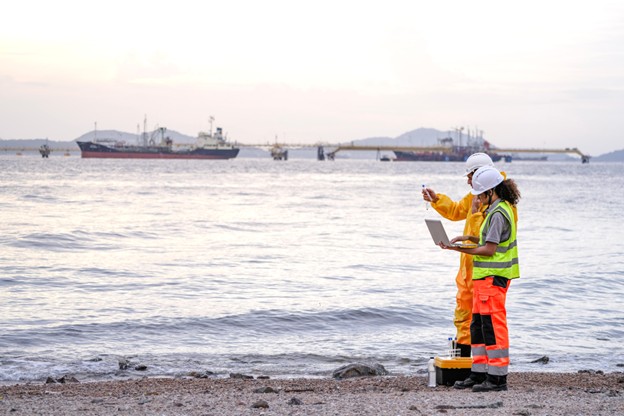
There is a particular kind of clarity that comes from standing in the field – boots sinking into marsh sediment, wind shifting across a tidal flat, data sheets damp from the spray. It is the kind of clarity no textbook, simulation, or virtual module can replicate. Marine science doesn’t reward distance; it rewards proximity. And in an era where so much learning has drifted toward screens, controlled environments, and curated experiences, the value of stepping directly into the ecosystem has only grown.
This is where John Wnek insists the future of marine education must anchor itself. His work with students across New Jersey has repeatedly shown that young scientists don’t fully grasp the stakes of coastal stability, endangered species, or estuarine function until they are physically inside the environments they aim to understand. The field itself becomes the teacher, and the lesson is always more persuasive than theory.
Why Marine Science Isn’t Built for Passive Learning
Ocean environments change all the time. In just minutes, currents, salinity, temperature differences, and species’ behavior can all change. This cannot be shown on a movie or diagram. Being present is necessary for the work itself. To learn more about a terrapin nest, you need to feel the sand and look for small patterns of tracks. If you want to understand beach erosion, you need to stand where the wind has cut through plants. To judge the quality of the water, you have to take a sample yourself and think about what the numbers mean for that tide and day.
This is why John Wnek of New Jersey argues that marine science loses its integrity when separated from the environment that shapes it. Students trained only through classrooms may learn the terminology, but they miss the instinct that develops when the ecosystem becomes familiar terrain.
Fieldwork Teaches What Classrooms Cannot
Hands-on learning builds skills that are foundational, not supplemental. When students work directly in estuaries, bays, and marsh systems, they learn:
- How to interpret conditions when the environment is unpredictable
- How to identify species not from photos, but from behavior, habitat, and subtle markings
- How to adjust methods in real time when equipment fails, tides shift, or weather changes
- How to distinguish healthy ecosystems from stressed ones without relying solely on numbers
As John Wnek often emphasizes, confidence in the field is not built from memorization. It is built from repetition, observation, and learning how to read the landscape the same way a seasoned mariner reads a chart.
The Student Who Does the Work Learns the Work
One benefit of hands-on learning that is often ignored is that it helps kids grow up. To do marine study responsibly, you need to collect accurate data, treat animals with respect, protect fragile habitats, and be aware of your surroundings. When students help with dune studies, water sampling, or keeping an eye on terrapins, they are responsible to something bigger than themselves.
This is why John Wnek of New Jersey continues to build programs that place students at the center of real research – because the experience changes how they approach science, community responsibility, and environmental stewardship.
Data Has More Weight When You Collected It Yourself
Realizing that every number has a story is one of the most life-changing things that can happen to a young researcher. The salt reading shows the tide. A count of nests shows the season. A rise in haze is caused by storm water from the night before. When students collect their own data, they start to see how the different parts of an ecosystem are linked. This makes their analyses more well-thought-out, accurate, and based in reality.
As John Wnek notes, when students see the connection between their measurement and the health of the bay – when they understand that their data may guide conservation decisions – they approach the work with an entirely different level of intent.
The Future of Marine Science Depends on Immersive Education
As problems with the environment get trickier, we will need experts who can read both data and ecosystems even more. Students learn not only how to understand their surroundings but also how to guess how they will act and react to stress in the future through hands-on training.
Marine science has never been a discipline that rewards distance. Its greatest insights emerge when the learner steps directly into the environment and allows the landscape to become the textbook.
That is why John Wnek stands firmly behind a simple truth: the strongest scientists begin as active observers, not passive students. And as long as the ocean continues to evolve, marine education must evolve with it, grounded in fieldwork, guided by curiosity, and shaped by the unfiltered reality of the coast.

