


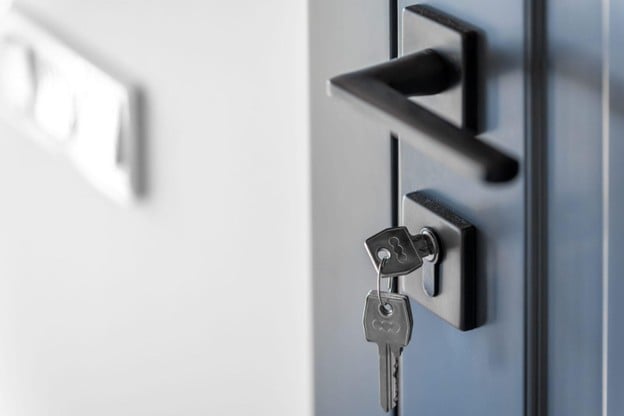
When homeowners reassess entry security, MT5+ Deadbolts can bring attention to an important principle: the front door should be evaluated as a complete security system. A sturdy door alone may not provide the intended protection if the lock, cylinder, frame, or key-management process receives less attention.
Because homeowners use the front entrance every day, they often prioritize convenience and appearance when selecting hardware. Security upgrades require another perspective, considering how each component works together to control access.
The Front Door Is More Than a Door
An exterior entrance includes several components that influence overall security. The door slab, frame, hinges, strike area, deadbolt, cylinder, and keys all play different roles.
Upgrading only one component without considering the others can leave an imbalance.
For example, a homeowner might install a stronger exterior door while continuing to use an older basic deadbolt. Another property might have capable locking hardware attached to a weakened frame.
When considering MT5+ Deadbolts, it is useful to look beyond the lock itself and examine the condition of the entire entry point. Security depends on how well the components function together rather than on one feature operating independently.
Why MT5+ Deadbolts Bring the Cylinder Into the Conversation
People often judge a deadbolt by the visible bolt extending into the door frame. The cylinder also deserves attention, as it interacts with the key and controls the lock’s operation.
High-security systems are designed to address more than the strength of the bolt.
Mul-T-Lock MT5+ technology uses telescopic pin mechanisms along with an additional locking element known as the Alpha Spring. These components are designed to create a more complex locking mechanism than conventional pin arrangements.
For homeowners comparing MT5+ Deadbolts with ordinary residential hardware, this distinction illustrates why the internal cylinder can be an important consideration.
A deadbolt should not be evaluated only by how substantial it appears from the outside.
Forced Entry Can Target Different Parts of an Entrance
Physical attacks on a door do not necessarily focus on one component.
Depending on the situation, force or manipulation may be directed toward the lock, cylinder, bolt, frame, or surrounding door construction. This makes a layered approach more useful than assuming one piece of hardware can address every vulnerability.
Superior Locks describes Mul-T-Lock deadbolts as incorporating features intended to provide resistance against methods such as picking, drilling, and sawing. The deadbolt line also includes a one-inch bolt designed for resistance to sawing.
These features make MT5+ Deadbolts relevant when homeowners are looking beyond basic locking functionality and considering how their entry hardware is constructed.
However, even stronger hardware should be installed as part of an appropriately maintained door assembly.
A Strong Lock Still Depends on the Door and Frame
Installing upgraded hardware does not automatically strengthen a damaged door or deteriorated frame.
Homeowners should inspect exterior doors for signs of wear, splitting, loose components, or other conditions that could affect the way the lock engages. The strike area also matters because that is where the deadbolt connects with the frame when locked.
This is why selecting MT5+ Deadbolts can be one part of a broader front-door review rather than the entire project.
The National Crime Prevention Council provides home and neighborhood safety resources emphasizing practical measures homeowners can take to improve security. Physical security is generally strongest when multiple reasonable precautions work together rather than when a household relies on a single device.
Professional installation can also help ensure that locking hardware is appropriately fitted to the door and frame.
Key Control Continues After Installation
The security conversation does not end once a new deadbolt has been installed.
Homeowners also need to consider who possesses working keys and how additional copies can be obtained.
This becomes especially relevant for households that provide keys to relatives, housekeepers, pet sitters, contractors, or other individuals. Over time, it may become difficult to remember exactly how many copies exist.
Mul-T-Lock uses controlled key systems intended to place greater restrictions around unauthorized duplication. MT5+ Deadbolts therefore introduce a key-management consideration alongside their mechanical security features.
The principle is straightforward: controlling entry involves both the lock on the door and the keys capable of operating it.
Moving Into a Home Is a Natural Time for Review
A move creates an opportunity to reassess exterior access.
Even when previous owners return the keys they were given, a new homeowner may not know whether other copies were made or distributed over the years. Contractors, relatives, neighbors, former occupants, or service providers could potentially have received keys at some point.
This uncertainty is one reason locks are commonly reconsidered after a change in occupancy.
Homeowners evaluating MT5+ Deadbolts during a move can use the opportunity to examine all exterior entry points rather than focusing only on the front entrance.
The front door may be the logical starting point, but side doors, garage access doors, and other exterior entrances should not automatically be overlooked.
Everyday Convenience Should Still Be Considered
A high-security lock is used during ordinary daily routines.
Residents may lock and unlock the door several times each day, distribute keys among household members, or need additional authorized copies later. Security hardware therefore needs to work within the practical requirements of the property.
Before selecting MT5+ Deadbolts, homeowners can consider:
- How many people need regular access
- Whether authorized duplicate keys will be required
- Which exterior doors need upgraded hardware
- Whether multiple locks should work within a coordinated system
- Whether the existing door and frame are in suitable condition
- Who should retain authority for obtaining additional keys
- Whether professional installation or rekeying is appropriate
Thinking through these questions can help homeowners create an access arrangement that remains manageable after installation.
Security Needs Can Change Over Time
A household’s access requirements are rarely permanent.
Children grow older and may need their keys. A caregiver might begin visiting regularly. Contractors may require temporary access during renovations. A property may eventually become a rental or accommodate additional residents.
Those changes can affect how keys and locks should be managed.
MT5+ Deadbolts can fit into a broader Mul-T-Lock security system where controlled key duplication and organized access are priorities. Homeowners should still periodically reconsider who has access and whether existing arrangements continue to match the property’s needs.
Security is better viewed as an ongoing responsibility than as a one-time hardware purchase.
Start With the Entry Point People Use Most
Home security can involve cameras, lighting, alarms, smart devices, locks, and many other measures. With so many options available, homeowners may find it difficult to determine where an upgrade should begin.
The front door provides a practical starting point because it combines the physical door, locking hardware, key control, and everyday access in one frequently used location.
Considering MT5+ Deadbolts encourages homeowners to examine not just their door locks but also how the complete locking system manages physical resistance and authorized access.
Mul-T-Lock hardware can strengthen one important part of that system, while the condition of the door, frame, installation, and management of keys remain equally relevant considerations.
A security upgrade is therefore most useful when it addresses the entrance as a whole. Starting with the front door can reveal where existing hardware is sufficient, where vulnerabilities may remain, and which improvements can create a more deliberate approach to protecting the property.

